







How to Hire a Shopify Store Setup Expert

15 min read
24 Jun, 2026

Hiring a Shopify store setup expert is the highest-leverage decision a new merchant makes in the first 90 days. The right setup specialist saves months of trial-and-error, prevents technical debt that compounds for years, and gets you to first sales faster. This guide covers when to hire, where to find vetted setup specialists, what to look for, vetting questions, red flags, cost ranges, and the first 30 days.

AI Summary

Hire a Shopify store setup expert when you are launching a new store, migrating from another platform, or rebuilding an existing storefront. Look for verified case studies on stores at your scale, Shopify Partner status, and clear documentation practices. Project costs run $500-$10,000 for most launches, $10,000-$50,000+ for complex agency builds. Avoid providers who quote without auditing your needs or push templates instead of tailored setup.

Why Shopify setup expertise matters

Reviewed by the shopexperts editorial team. Last updated June 24, 2026.

Hiring a Shopify store setup expert is the highest-leverage decision a new merchant makes in the first 90 days. The setup choices made before launch (theme selection, app stack, payment configuration, catalog structure, SEO foundations) compound over the entire lifetime of the store. Get them right and growth is easier. Get them wrong and you spend the next year fixing problems you should not have created.

Generic ecommerce advice does not capture what Shopify setup actually involves. Shopify-specific quirks (Liquid theme constraints, app injection patterns, the /products/ and /collections/ URL structure, Markets configuration, and the difference between standard themes and headless setups) shape every setup decision.

A generalist web developer can build a Shopify store but will likely miss the platform-specific best practices that a dedicated Shopify setup specialist applies automatically.

This guide covers when to hire, where to find vetted setup specialists, what to look for, the eight questions to ask before signing, red flags to watch for, realistic cost ranges, and how to structure the first 30 days of the engagement.

If you have already decided to hire, see Shopify Store Setup Experts to browse vetted specialists. For the broader Shopify expert lifecycle, see Shopify Store Setup & Management Experts.


When to hire a setup expert vs DIY

Not every Shopify launch needs a paid setup expert. Knowing when to hire and when to DIY is the first decision.

Hire a setup expert when

  • You have a large product catalog (1,000+ SKUs, complex variants, configurable products). Manual catalog setup at scale is error-prone and time-consuming.
  • You are migrating from another platform (Magento, WooCommerce, BigCommerce, Wix, Squarespace). Migration mistakes cost SEO rankings and break customer accounts.
  • You need custom theme work or significant brand customization beyond default theme settings.
  • You are launching on Shopify Plus (Functions, Checkout Extensibility, B2B catalogs, multi-domain setups all need specialist knowledge).
  • You are selling internationally from day one (Markets, multi-currency, hreflang, tax compliance across regions).
  • You need B2B or wholesale functionality (custom pricing, customer accounts, terms, gated catalogs).
  • You have time-sensitive launch deadlines tied to product drops, seasonal cycles, marketing campaigns, or investor demos.
  • You do not have technical capacity in-house and want to focus on product, marketing, and operations rather than configuration.

DIY can work when

  • You are launching with under 100 SKUs in a standard product structure.
  • You are using a default Shopify theme (Dawn, Sense, Crave, Refresh) with minimal customization.
  • You have technical comfort with platform admin tools and willingness to learn.
  • Budget is genuinely the constraint and you have time to figure things out.
  • You can hire targeted help for specific tasks (theme customization, app setup) without paying for full setup.

The hybrid model is often best for budget-constrained launches: DIY the basic configuration, hire a freelancer for theme customization and the technical pieces, run it yourself from there. For the deeper DIY-vs-hire decision framework with hidden costs of each path and store-stage recommendations, see DIY vs Hire a Shopify Setup Expert.

Where to find vetted Shopify setup experts

The Shopify ecosystem has several places to find setup help, with very different quality and pricing.

Vetted directories (recommended for most merchants)

Pre-vetted directories like shopexperts filter for quality before listing operators. The vetting typically covers Shopify Partner status, verified case studies, client review history, and specialty match. The trade-off is fewer options compared to open marketplaces, but the screening removes the lowest-quality tier.

Shopify Partner Directory

The official Shopify Partners directory lists agencies and freelancers who have achieved Shopify Partner, Plus Partner, or Premier Partner status. Partner status is meaningful (it requires demonstrated competence) but does not guarantee quality. The directory is large; filtering is limited; you do the vetting work yourself.

General freelance marketplaces

Upwork, Fiverr, and similar platforms have large pools of self-described Shopify experts at low cost. The quality range is enormous, from genuine specialists to people who watched a YouTube tutorial last week. Vetting takes significant time. Verification is harder because anyone can claim Shopify experience on a generic freelance platform.

Referrals from existing merchants

Personal referrals from merchants who shipped a successful Shopify launch are usually the highest-trust source. Limitations: the referred operator may not have capacity, may not specialize in your specific needs, and merchant referrals tend to anchor on operators who served similar stores rather than the best fit for your situation.

Cold outbound from agencies

Agencies that find you via cold outreach are usually not the best fit. The good operators have inbound demand from referrals and content. Cold outbound usually means either a sales-heavy agency or one with capacity problems. Approach with caution.

For most launches, start with a vetted directory like shopexperts or the Shopify Partner Directory. Use referrals as a sanity check on shortlisted operators.

What to look for in a setup specialist

Once you have a shortlist, the evaluation criteria that matter most:

Verified Shopify case studies on stores at your scale

Three to five case studies from stores in your size range and industry tell you more than years of experience. Look for case studies that name the specific work performed (theme installed, apps integrated, migration completed) rather than generic claims like "helped grow the business."

Shopify Partner status (Partner, Plus Partner, or Premier Partner)

Partner status indicates demonstrated competence on the platform. Plus Partner status signals enterprise Shopify Plus capability. Premier Partner is the highest tier and indicates significant Shopify Plus experience. Lack of Partner status is not disqualifying for solo freelancers, but it is a yellow flag for agencies.

Specific specialty match

A theme customization specialist is not the same as a migration specialist is not the same as a B2B Plus specialist. Match the operator's specific specialty to your needs. Generic "Shopify expert" framing without a clear specialty often means surface-level competence across many areas without depth in any.

Documentation practices

Good setup specialists document the work as they do it: configuration choices, app setup notes, theme customization changes, credentials handoff. Ask how they document the work and request samples from past projects. Operators who do not document create dependency and make handoff to the next operator (or to your team) painful.

Communication style and project management

Setup projects involve dozens of small decisions. The operator's communication cadence (daily standups, weekly reports, async messaging) should match your preferences. Project management tools (Notion, Linear, ClickUp, Trello) should be agreed upfront.

Clear scope and pricing

Good operators write clear scopes of work that name the specific deliverables, the price, and the exclusions. Vague pricing ("we will figure it out as we go") almost always leads to scope creep and disputes. Hourly rates without estimated hours, or fixed prices without defined scope, are warning signs.

References from recent clients

Two reference calls with merchants who completed setup projects in the last six months tell you about current quality, current capacity, and current communication style. Older references can be misleading because operators change as their team and workload changes.

Eight vetting questions to ask before signing

Eight specific questions that separate genuine Shopify setup specialists from generalists:

  1. "Walk me through three recent Shopify launches you led, with specific details on theme, apps installed, catalog size, and timeline." Detailed answers indicate genuine experience. Vague answers indicate either junior-level work or that the senior salesperson is not the one doing the work.
  2. "How do you approach theme selection for a new launch, and how do you decide between a free theme, a paid theme, and a custom build?" A specialist has a clear framework. A generalist gives a vague answer or pushes the most expensive option.
  3. "How do you handle product catalog import for a store with [your SKU count]? What are the most common mistakes you see?" Catalog setup at scale is where many launches break. The answer reveals how much real catalog work the operator has done.
  4. "How do you set up the app stack, and what is your principle for adding versus skipping apps?" App over-installation is a Shopify-specific problem. Good operators have a strong principle for keeping the stack lean.
  5. "Walk me through a Shopify migration you completed in the last year, including how you preserved SEO during the move." Only relevant if you are migrating. SEO preservation during migration is technical and easy to get wrong. Vague answers here are a serious warning sign.
  6. "What is your documentation practice during setup, and what do I receive at handoff?" The handoff package should include credentials, configuration notes, app inventory with login details, and a clear log of customizations made. Operators who skip documentation create long-term problems.
  7. "What does your scope of work include and exclude, and how do you handle scope changes?" The answer tells you whether the operator has a mature pricing practice or whether you should expect surprise change orders.
  8. "Who specifically will do the work, and what is their experience?" At agencies, the senior person who pitches the project is often not the person who does the work. The actual operator's experience is what matters.

Hesitation or vague answers on any of these is informative. The operator does not have to ace every question, but evasiveness is a stronger signal than imperfection.

Red flags to watch for

Specific patterns that should make you walk away from a Shopify setup engagement:

  • Quotes without auditing your needs. An operator who quotes a price within minutes of a sales call has not actually scoped your project. Real setup work involves understanding your catalog, your apps, your migration source (if any), your timeline, and your team. Quotes without diagnosis are templates.
  • Pushes a specific theme or app stack regardless of your needs. Operators with kickback relationships sometimes push specific themes or apps that do not actually fit. Watch for over-strong recommendations in the first call.
  • Cannot show case studies from comparable stores. A B2C launch is not the same as a B2B launch. A small store is not the same as a 10,000-SKU store. Case studies should match your situation, not just "Shopify experience" in general.
  • No Shopify Partner status and no Partner Directory listing. Not disqualifying for solo freelancers, but a warning sign for agencies claiming to specialize in Shopify.
  • Vague pricing or hourly without estimated hours. "We will see how it goes" is not a pricing model. Real operators can estimate.
  • Demands payment upfront with no escrow option. Reasonable upfront deposits are normal (typically 30-50%). 100% upfront is a serious red flag.
  • Refuses to provide references. Two reference calls with recent clients is a standard ask. Refusing to provide references is disqualifying.
  • Communication is slow or inconsistent during the sales process. If pre-contract communication is bad, post-contract communication is worse.
  • Aggressive sales tactics ("limited time pricing," "slots filling up"). Genuine setup specialists with good demand do not need fake scarcity. This is a marketplace-style sales tactic.
  • The senior person pitches and a junior team executes. Verify who actually does the work before signing. Bait-and-switch on staffing is common at agencies.
  • Locks you into ongoing retainers as a condition of setup work. Setup is a defined project. Forced retainers afterward are a way to extract recurring fees without ongoing value.

What Shopify setup actually costs

Shopify store setup costs vary widely by scope, store complexity, and the operator's experience tier. Realistic ranges:

EngagementTypical costBest for
Basic setup with a freelancer$500-$2,500Small catalogs (under 100 SKUs), default theme, standard payment setup, basic app installation
Mid-complexity setup$2,500-$10,000Larger catalogs, paid theme with customization, multiple app integrations, basic SEO setup, light migration
Full agency build$10,000-$50,000+Custom theme, complex catalogs, B2B setup, multi-region, full migration with SEO preservation, custom apps
Shopify Plus setup$15,000-$100,000+Plus-specific features (Functions, Checkout Extensibility, B2B catalogs, multi-domain, Hydrogen/headless)
Platform migration to Shopify$5,000-$50,000+Magento, WooCommerce, BigCommerce, custom platform migrations with URL mapping and SEO preservation
Hourly consulting (DIY support)$50-$250/hourTargeted help on specific tasks while you handle the rest yourself

Hourly rates by operator tier:

  • $25-$75/hour — offshore freelancers. Quality ranges from acceptable to poor. Verify heavily.
  • $75-$150/hour — experienced freelancers and small agencies. Most cost-efficient tier for solid work.
  • $150-$300/hour — senior specialists, established agencies, technical experts.
  • $300-$500+/hour — top-tier consultants, enterprise agencies, Plus specialists.

For the full pricing breakdown by store revenue tier and engagement type, see Shopify Store Setup Cost. For broader Shopify expert pricing across all categories, see Shopify Expert Cost.

How to structure the engagement

How setup projects are structured affects both cost and risk. Common engagement models:

Fixed-price project

A defined scope at a fixed price. Best for clearly-scoped launches where the requirements are stable. Pros: cost certainty, clear deliverables. Cons: if scope changes, you renegotiate; operators may pad estimates to absorb uncertainty.

Time-and-materials (hourly)

Pay for hours worked with an estimated range. Best for projects with evolving scope or where you want flexibility to adjust as you learn. Pros: you only pay for work done. Cons: cost uncertainty, requires trust in the operator's billing practices.

Phased project

Setup broken into phases (admin config, then theme, then catalog, then apps, then QA) with separate scopes per phase. Best for larger projects where requirements clarify over time. Each phase has a clear go/no-go decision point.

Retainer with setup included

Monthly retainer covering setup plus ongoing maintenance. Best for merchants who want long-term partnership and ongoing support. Watch for setup work that should be project-based being padded into retainer time.

Milestone-based payment

Pay against specific milestones (theme installed, catalog complete, apps configured, store launched). Most projects of $5,000+ should use milestone payments rather than full upfront or end-of-project payment. Protects both parties.

For most launches under $10,000, a fixed-price project with milestone payments is the right structure. For larger or more complex launches, a phased project with clear scope per phase reduces risk. For deeper engagement structure analysis, see Shopify Freelancer vs Agency.

The first 30 days: checkpoints to demand

The first 30 days of a setup engagement set the trajectory for the entire launch. Specific checkpoints to demand:

Week 1: Discovery and planning

  • Kickoff call covering goals, timeline, brand assets, and existing materials
  • Documented scope of work, deliverables, milestones, and pricing
  • Communication and project management tools agreed and set up
  • Initial Shopify admin access provisioned (with proper permissions, not full admin sharing)
  • Theme decision documented with rationale
  • App stack proposed with rationale per app

Week 2: Foundation setup

  • Shopify admin configured (general settings, locations, tax basics, checkout configuration)
  • Theme installed and brand-customized
  • Payment gateways set up and tested with real transactions
  • Shipping zones and rates configured
  • Domain setup and DNS configuration if applicable
  • First batch of products imported as test catalog

Week 3: Catalog and content

  • Full product catalog imported with proper variants, collections, and SEO-friendly URLs
  • Product imagery uploaded and optimized
  • Collection structure built with descriptive content
  • Essential pages (About, Contact, Shipping, Returns, Privacy, Terms) created
  • Navigation menus structured
  • Apps installed and configured

Week 4: QA and launch prep

  • End-to-end test purchases on desktop and mobile
  • Speed and Core Web Vitals check
  • Broken link and image audit
  • Google Search Console and GA4 setup and verification
  • Sitemap submitted to Google Search Console
  • SEO basics: title tags, meta descriptions, alt text
  • Final handoff documentation (credentials, customizations log, app inventory)
  • Launch and post-launch monitoring plan

Operators who skip any of these checkpoints or hand off without documentation create long-term problems. Demand the documentation at handoff or expect to pay the next operator to recreate it. For the complete phase-by-phase setup checklist covering all eleven phases of work, see The Complete Shopify Store Setup Checklist.

Browse vetted Shopify store setup experts

Shopify Consultant
4.9(64 reviews)

Speed & Performance Specialist for Shopify Stores

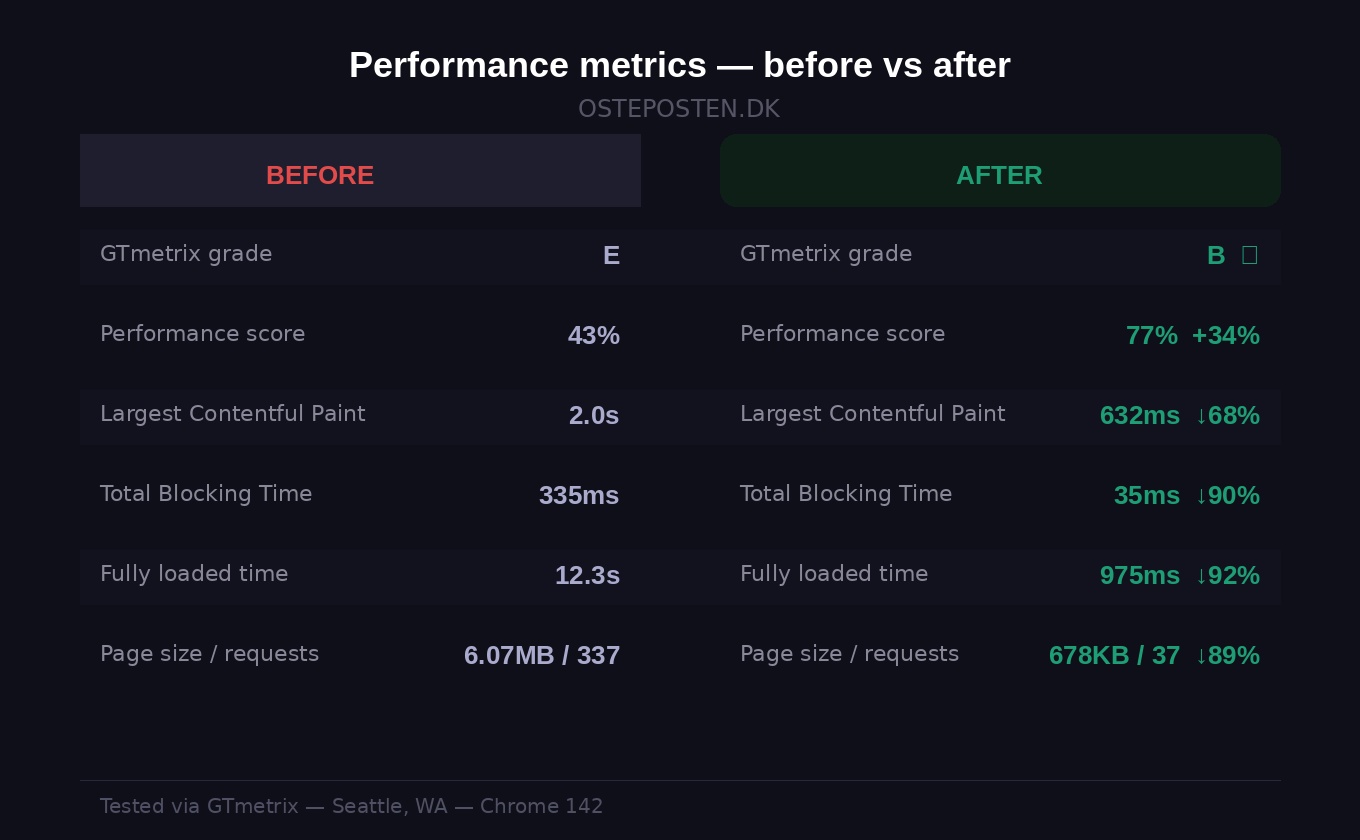
I helped an apparel brand improve their mobile Lighthouse score from 7 to 65 three weeks before Black Friday, protecting $18K+ in holiday sales. That's what I do — I find what's slowing your store down and fix it.

I specialize in Shopify speed optimization, Core Web Vitals, tracking/pixel setup, and accessibility compliance for established stores doing $500K+ annually. I treat speed as a revenue problem, not just a technical checkbox.

Available Mon-Fri 7am-3pm EST. Flexible scheduling for urgent pre-launch issues.

What I work on:

  • Speed audits and Core Web Vitals optimization

  • Meta Pixel and GA4 tracking setup and audits

  • Accessibility compliance (WCAG/ADA)

  • Theme performance tuning

  • Server-side tracking

  • Ongoing technical support via support packs

Key Results:

  • 7→65 mobile score, protecting $18K+ in Black Friday sales

  • 74% faster load times across product pages and checkout

  • Restored accessibility compliance for premium housewares brand - traced 302 "critical" findings to a single widget conflict

  • Longest client relationship: 2+ years with 17+ projects

How I Work:

  1. Diagnostic audit identifies actual bottlenecks (not guesswork)

  2. Phased implementation — you approve each milestone

  3. 90-day post-launch support

80+ projects completed, 96% satisfaction rate. Clients across the US, Canada, Australia, Denmark, and Sweden.

Send me your store URL and I'll tell you exactly what's slowing it down - no commitment needed.

App and Theme Skills
+ 20 more
From $95/Project
Front-End Developer
5.0(121 reviews)

For over ten years, I’ve been helping Shopify store owners elevate, customize, and maintain their websites as a Shopify expert at HeyCarson—now rebranded as Shopexperts—where I’ve had the privilege of being the longest-serving developer on the team.

I’m also among the platform’s top-rated experts, known for my attention to detail, reliability, and dedication to client satisfaction.

Delivering quality results and building lasting client relationships have always been at the core of my work. Feel free to check out reviews from my past clients—they’re the best proof of my commitment to 100% project success.

App and Theme Skills
+ 31 more
From $100/Project
Front-End Developer
5.0(21 reviews)

I'm a Shopify developer with years of hands-on experience building and scaling e-commerce stores — from custom theme development to conversion rate optimization and third-party integrations. I've worked with brands like Après Nail and through platforms like Storetasker, delivering solutions that look great and perform even better.

I specialize in Liquid programming, frontend development, and UI/UX enhancement. Whether you need a full theme build, a tricky app integration, or a speed and SEO overhaul, I bring a detail-oriented approach that gets results — not just code.

I leverage AI tools like ChatGPT and GitHub Copilot throughout my workflow — drafting Liquid logic faster, QA-testing edge cases, and generating content-ready section structures. This means faster turnaround, fewer revisions, and more value for your budget.

My background spans custom store builds, GA4 + GTM tracking setups, Klaviyo integrations, loyalty app configurations, A/B testing, and cross-functional collaboration with design and marketing teams. I treat every project like it's my own store on the line.

I'm a Computer Software Engineering graduate and Growth Collective certified in Creative Website Design (Shopify). Let's build something that converts.

App and Theme Skills
+ 38 more
From $295/Project

Frequently asked questions about hiring a Shopify store setup expert

How much does it cost to hire a Shopify store setup expert?

A basic Shopify store setup with a freelancer runs $500-$2,500 for small catalogs and default themes. Mid-complexity setups run $2,500-$10,000 for larger catalogs, paid themes with customization, and multiple app integrations. Full agency builds run $10,000-$50,000+ for custom themes, complex catalogs, and B2B setups. Shopify Plus setups run $15,000-$100,000+ depending on Plus-specific features. Platform migrations to Shopify run $5,000-$50,000+ depending on source platform complexity. Hourly rates range from $50-$250 for most legitimate operators.

How long does it take to set up a new Shopify store?

A basic Shopify store setup takes 1-3 weeks with a freelancer for small catalogs and standard configuration. Mid-complexity setups take 3-6 weeks. Full agency builds with custom themes take 6-12 weeks. Shopify Plus setups can take 3-6 months for complex configurations with B2B, multi-region, or headless requirements. Platform migrations typically add 2-4 weeks on top of standard setup time. The timeline depends mostly on catalog size, theme complexity, and the number of integrations needed.

What should I look for when hiring a Shopify store setup expert?

Three to five verified case studies from stores at your scale and industry. Shopify Partner status (or Plus Partner / Premier Partner for higher-tier work). Clear specialty match for your specific needs (launch specialist vs migration specialist vs Plus specialist). Documentation practices that produce a clean handoff. Clear scope of work and pricing model. References from clients who completed projects in the last six months. Communication style and project management approach that matches yours.

Should I hire a freelancer or an agency for Shopify setup?

Most launches under $10,000 fit a freelancer better. Freelancers are typically more cost-efficient, more flexible, and the person you talk to does the work. Agencies make sense for projects above $10,000-$15,000 where coordination across multiple specialties (design, development, content, project management) justifies the overhead. Agencies also make sense for Shopify Plus, complex migrations, and stores with enterprise requirements. Watch for agency bait-and-switch where the senior person pitches and a junior team executes.

Can I set up a Shopify store myself, or do I need to hire someone?

DIY setup is feasible for small catalogs (under 100 SKUs), default Shopify themes with minimal customization, standard payment and shipping setup, and merchants with technical comfort and time. Shopify's onboarding flow guides much of the basic setup. Where DIY hits limits: large catalogs, theme customization beyond settings, platform migrations, B2B setup, international/Markets configuration, and Shopify Plus. A hybrid approach often works: DIY the basics, hire a freelancer for specific tasks like theme customization or migration support.

What are the red flags when hiring a Shopify setup expert?

Quotes without auditing your needs (template pricing instead of scoped pricing). Pushes specific themes or apps regardless of fit (often kickback relationships). Cannot show case studies from comparable stores. No Shopify Partner status for agencies. Vague pricing or hourly without estimated hours. Demands 100% payment upfront. Refuses to provide references. Aggressive sales tactics with fake scarcity. Bait-and-switch staffing where senior salespeople pitch but junior teams execute. Forced retainers as a condition of setup work.

What is included in a typical Shopify store setup engagement?

Initial Shopify admin configuration (general settings, locations, tax basics, checkout). Theme installation and brand customization. Product catalog import with proper variants, collections, and SEO-friendly URLs. Payment gateway setup (Shopify Payments, PayPal, regional methods). Shipping zone and rate configuration. Essential apps installed and configured (typically email, reviews, analytics, SEO). Customer-facing pages (About, Contact, Shipping, Returns, Privacy, Terms). Pre-launch QA with test orders. Google Search Console and GA4 setup. Documentation handoff covering credentials, customizations, and app inventory.

How do I structure payment for a Shopify setup project?

For projects under $5,000, a 50% upfront and 50% on completion split is standard. For projects $5,000-$25,000, milestone-based payments (typically three to five milestones across the project) protect both parties. For projects above $25,000, phased contracts with separate scopes and pricing per phase reduce risk. Avoid 100% upfront payment except for very small fixed-price tasks. Avoid 100% on completion arrangements, which incentivize operators to rush. Escrow arrangements through platforms like shopexperts can protect funds during longer engagements.

What should I receive at handoff from a Shopify setup expert?

Admin credentials transferred to your accounts with proper permission levels. A configuration document covering all custom settings, theme customizations, and app configurations. An app inventory with login details for each third-party tool. A list of customizations made to the theme code, including file locations and rationale. SEO basics documented (sitemap submitted, Search Console verified, GA4 configured). A post-launch monitoring plan for the first 30-60 days. Optionally, training materials or a recorded walkthrough for your team. Operators who skip the handoff documentation create dependency and make future work expensive.

Next step

Hiring a Shopify store setup expert is the highest-leverage decision a new merchant makes in the first 90 days. The setup choices made before launch compound over the entire lifetime of the store. Get them right with a vetted specialist and growth is easier from day one.

To compare Shopify store setup specialists side by side, filter by Shopify Partner tier, location, language, and specialty, and request a free quote:

Browse vetted Shopify store setup experts